
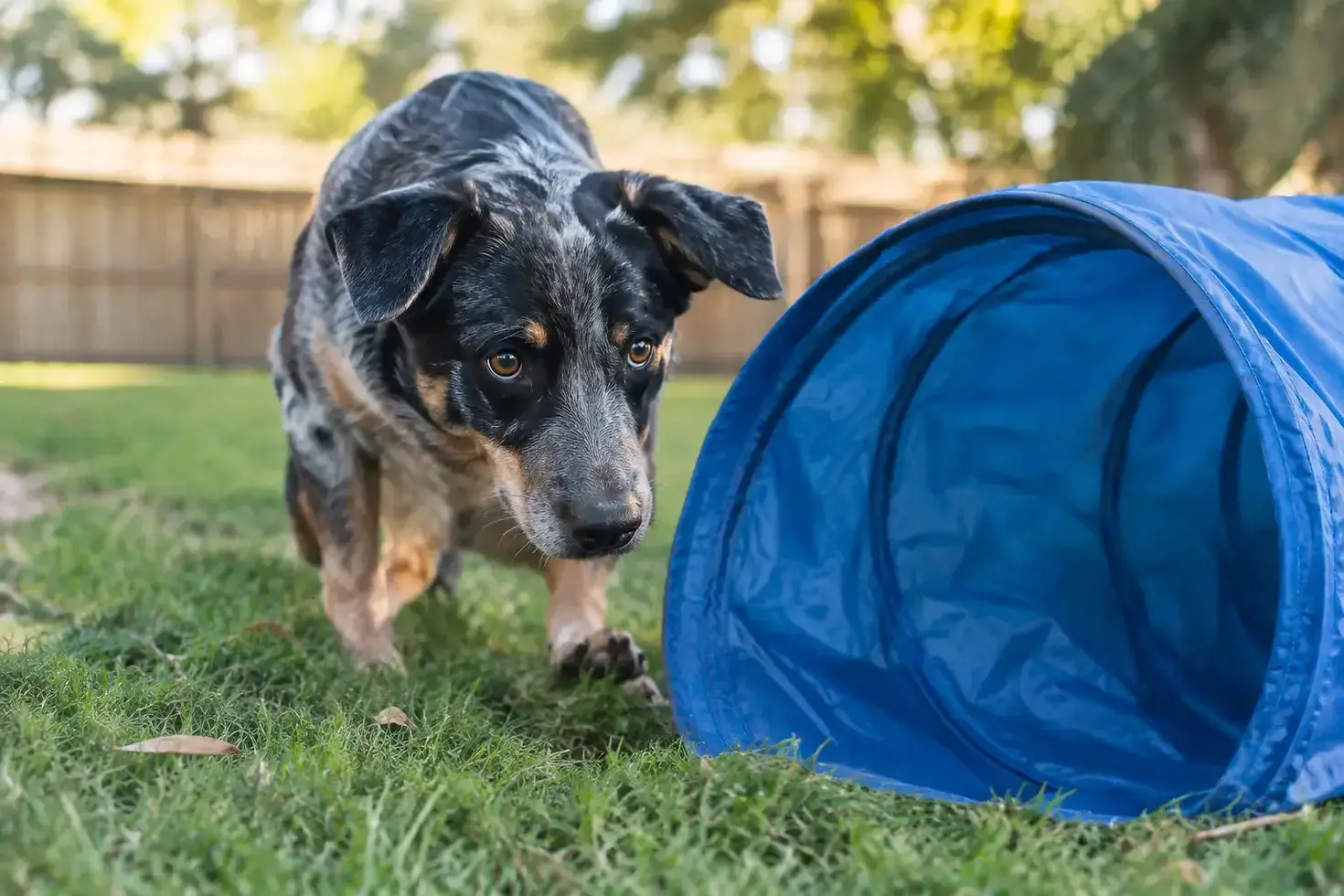
Fearful Dog Games That Build Confidence Safely

A dog who freezes at a new toy, backs away from a treat puzzle, or watches the room instead of joining in is not being difficult. They may be telling you that life feels a little too big right now. The best fearful dog games do not ask a worried dog to “get over it.” They create small, repeatable moments where your dog can make choices, succeed, and learn that good things happen in their presence.
For many families, play seems like something dogs either enjoy or do not. But play can also be a gentle confidence-building tool. When the game is easy enough and the pressure is low enough, it gives a fearful dog practice moving, sniffing, thinking, and engaging without feeling trapped or overwhelmed.
What Makes a Game Helpful for a Fearful Dog?
A confidence game is not about getting your dog excited, fast, or obedient. It is about helping them feel safe enough to participate. That means your dog gets room to opt in, step away, and return when they are ready.
Look for soft body language: a loose mouth, normal breathing, sniffing, taking treats comfortably, or choosing to approach. A tucked tail, repeated lip licking, turning away, freezing, hiding, or refusing food can mean the game is too hard, too close, too noisy, or happening at the wrong time.
Think of the game as an invitation, not an assignment. Your dog does not need to perform for the game to be worthwhile. Choosing to look at a new item from across the room can be a real win.
Keep the challenge small
Fear changes learning. A dog who is worried about visitors, traffic, unfamiliar people, or a new home may not have much extra capacity for puzzles or training. Start with games your dog can understand in seconds.
Use high-value food if it is appropriate for your dog’s diet, work in a familiar quiet space, and keep sessions short. Thirty calm seconds can be more productive than ten busy minutes. End while your dog is still comfortable, rather than waiting until they are done.
Fearful Dog Games to Try at Home
These games are simple by design. You do not need special equipment, and you do not need to push your dog closer to anything they find scary.
Treat Scatter and “Find It”
Gently toss a few treats on the floor or grass and let your dog sniff them out. Sniffing is a natural behavior that can help many dogs slow down and gather information about their environment.
For a dog who is hesitant, begin by placing treats close to them instead of tossing them across the room. As they grow more comfortable, you can make a tiny trail leading toward a favorite resting spot, an open doorway, or a new but non-scary surface. Do not use the trail to lure your dog toward something they are trying to avoid, such as a visitor or vacuum. The goal is choice, not trickery.
The Cardboard Box Buffet
Place a few treats in an open cardboard box, a shallow paper bag with the sides folded down, or a muffin tin. Keep everything easy to see and easy to leave. Let your dog investigate from whatever distance feels comfortable.
This is often a lovely first enrichment game for newly adopted dogs or shy puppies because there is no expectation to solve anything. If your dog startles at the sound of cardboard, simply use a towel on the floor with treats scattered over it instead. The material matters less than the feeling of success.
The “Touch It” Choice Game
Set a neutral object, such as a coaster, cone, or soft toy, several feet away from your dog. When your dog glances at it, looks toward it, or takes a step in its direction, calmly place or toss a treat away from the object.
Tossing the treat away is useful because it lets your dog reset and decide whether to approach again. Over time, they may choose to sniff or touch the object. There is no need to name the behavior or ask for a cue right away. Their choice to investigate is the lesson.
Hand Targeting, at Your Dog’s Pace
Hold an open hand a short distance from your dog’s nose. If they lean forward or touch your hand, mark the moment with a cheerful “yes” and give a treat. Then move your hand away.
Hand targeting can become a practical skill for walks, grooming, and moving around the house. For a fearful dog, though, the early goal is simply learning that a human hand can predict something pleasant. Never reach over your dog’s head or follow them with your hand if they move away. Let them come to you.
The Confidence Path
Create a simple path using everyday household items: a folded blanket, a bath mat, a low, stable cushion, or a sheet of cardboard. Scatter treats on or beside the surfaces and allow your dog to choose where to step.
This game can help dogs become more comfortable with different textures and gentle movement. Keep every surface stable and low. Avoid wobble boards, high obstacles, or anything that could make a nervous dog lose balance. Confidence grows from safe experiences, not from surprising ones.
The Calm Search Game
Hide a few treats in easy places while your dog watches: beside a chair leg, under the edge of a towel, or near an open box. Then say “find it” and allow them to search.
As your dog learns the game, you can make the hiding spots slightly more interesting. This can be especially helpful on rainy days or during a busy North Dallas afternoon when a long walk is not realistic. Keep the search simple enough that your dog finds something quickly. Frustration is not the goal.
When Games Are Not the Right First Step
Sometimes a dog is too worried to play, eat, or explore. That is useful information, not a failure. If your dog cannot take food outside, do not try to turn a stressful walk into a training session. Create more distance from the trigger, shorten the outing, or head home.
For example, a dog who is afraid of strangers may enjoy treat scatters in the backyard but freeze when a guest enters the house. Those are different environments with different emotional demands. Practice confidence games in calm settings first, then gradually build skills with professional guidance if needed.
If your dog has snapped, bitten, panicked, shown intense fear around children, or had a sudden behavior change, prioritize safety. Prevent close contact with triggers, avoid forced greetings, and speak with your veterinarian to rule out pain or medical contributors. A qualified force-free behavior professional can help you make a plan that protects both your dog and the people around them.
How to Know the Game Is Working
Progress can look quiet. Your dog may recover faster after hearing a sound, choose to investigate a new object, eat in a slightly busier room, or bring you a toy after weeks of staying withdrawn. Those small changes matter.
Try not to measure success by whether your dog becomes outgoing. Some dogs will always be selective, sensitive, or happiest with familiar people and routines. The goal is not to create a social butterfly. It is to help your dog feel safer and more able to navigate everyday life.
In Dallas, Frisco, Plano, and across DFW, many dogs are balancing apartment noise, busy sidewalks, delivery trucks, family schedules, and changing weather. A few minutes of thoughtful play at home can give them a predictable place to practice feeling capable.
If you are not sure whether your dog needs a simple confidence plan or more individualized behavior support, consider scheduling a free phone consultation with Wiggle Butt Academy. A supportive conversation can help you choose the next safe step for your furry friend.
TL;DR
Fearful dogs benefit most from low-pressure games that let them sniff, explore, and make choices. Start in a quiet, familiar place; keep the challenge easy; and watch your dog’s body language. Confidence is built through many small experiences of safety, not by pushing through fear.
Quick Tips
Let your dog choose whether to approach, pause, or walk away from every game.
Start with easy food searches and familiar household items.
Keep sessions short and stop while your dog is still comfortable.
Toss treats away from new objects so your dog can reset and choose to return.
Seek veterinary and qualified force-free professional support for severe fear, bite concerns, or sudden changes.
Thank you for spending time with the Wiggle Butt Library. Learning your dog’s comfort signals is a meaningful way to show them they are safe, heard, and cared for.


Comments