How to Become a Positive Reinforcement Dog Trainer

A dog who barks, pulls, freezes, growls, or jumps is not giving you a reason to get tougher. They are giving you information. Learning to read that information - and helping people respond with skill and compassion - is at the heart of how to become a positive reinforcement dog trainer.
It is meaningful work, but it is more than loving dogs or teaching a reliable sit. A thoughtful trainer understands learning theory, canine body language, safety, coaching, and the real-life pressures families face. You may be helping a puppy settle during school pickup, supporting a reactive dog on a busy Dallas sidewalk, or showing a family why their dog struggles at a crowded patio. The goal is not perfect obedience. It is a dog who is safe enough to learn and a family who knows what to do next.
What Positive Reinforcement Training Really Means
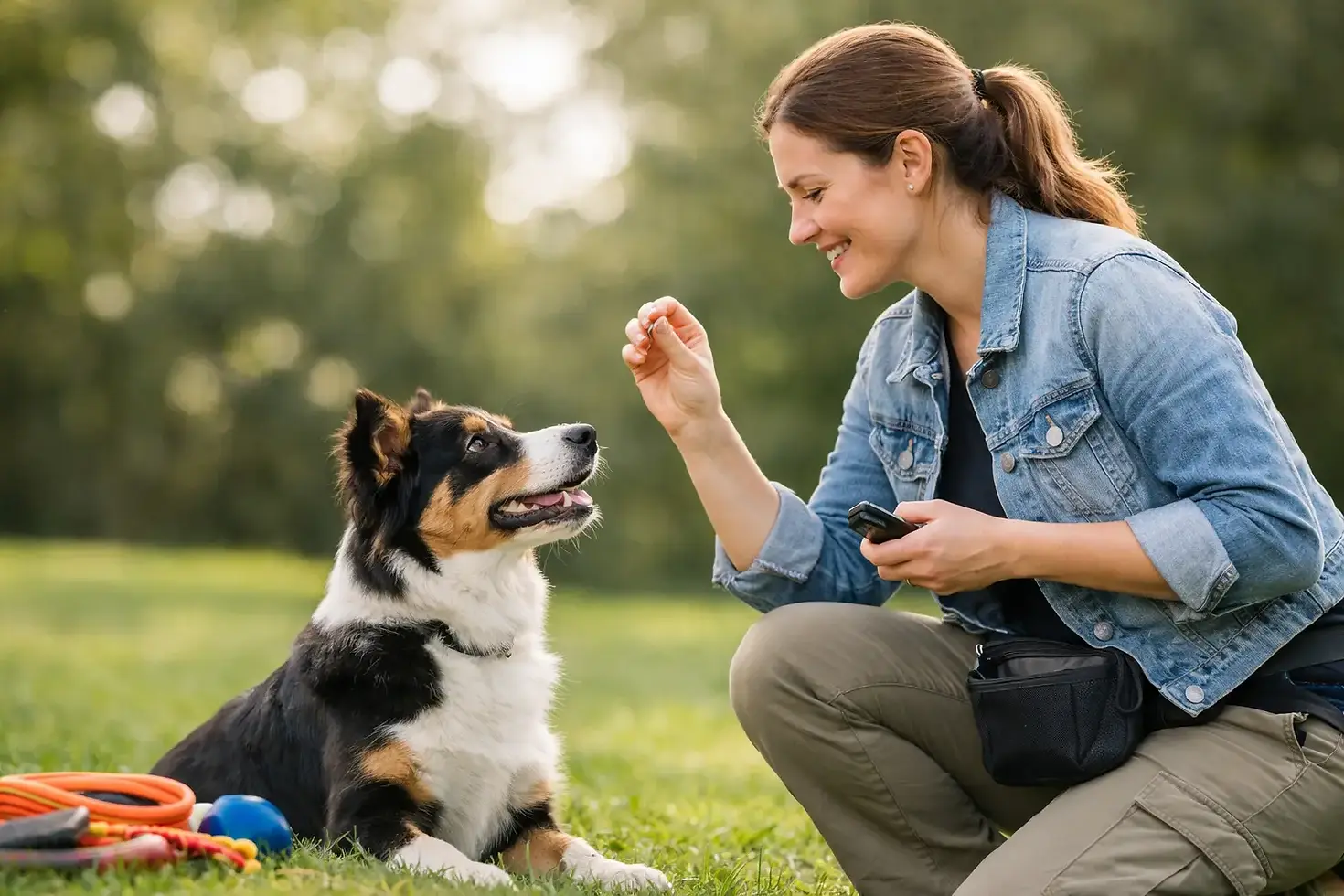
Positive reinforcement means adding something the dog values after a behavior, making that behavior more likely to happen again. A treat after a recall, access to sniff after walking beside a person, or a tossed toy after a successful check-in can all reinforce behavior. The reward is not a bribe. It is information: “That choice worked.”
This approach does not mean saying yes to everything a dog does. Force-free training includes structure, management, boundaries, enrichment, prevention, and carefully taught skills. If a dog is rehearsing jumping on guests, we might use a gate, a leash, distance, and a practiced stationing skill while the dog learns a more successful greeting. Your dog does not need to be scared to learn.
A positive reinforcement trainer also looks beneath the behavior. A growl may communicate fear or discomfort. A dog who pulls toward another dog may be excited, frustrated, worried, or all three. Behavior is information, not a character flaw. That lens is what separates modern, humane training from methods built around intimidation, dominance myths, or pain.
How to Become a Positive Reinforcement Dog Trainer: Build the Foundation
Start by studying how dogs learn. You do not need a college degree to begin learning, but you do need more than social media tips and personal experience with one beloved dog. Read broadly, take reputable courses, observe skilled trainers, and learn to question simple explanations for complicated behavior.
Your early education should include classical and operant conditioning, reinforcement schedules, antecedent arrangement, marker training, generalization, and extinction. It should also cover canine body language, stress signals, arousal, fear, frustration, breed tendencies, enrichment, and basic welfare. These subjects matter because a dog cannot use a new skill well when they are overwhelmed, overexcited, exhausted, in pain, or frightened.
Pay close attention to body language. Learn the quieter signals as well as the obvious ones: turning away, lip licking, sudden sniffing, a lowered body, a tucked tail, a still posture, hard staring, and changes in breathing. Dogs often communicate discomfort well before they bark or growl. A trainer who notices early signals can help both ends of the leash before a situation becomes harder.
When choosing education, look for programs that are transparent about their ethics and curriculum. Good instruction teaches you how to teach, how to assess risk, and when to refer to another professional. Be wary of programs that promise certification in a weekend, frame every issue as disobedience, or rely on dominance language and corrections as a default solution.
Get Hands-On Experience Before You Take Clients Alone
Knowledge becomes useful when you can apply it around real dogs and real people. Begin with low-risk, well-supported practice. Volunteer with a shelter or rescue that uses humane handling. Assist in a puppy class. Offer to help a friend teach a simple foundation behavior, such as a hand target or settling on a mat, while staying within your experience level.
Observation is part of the work. Watch how different dogs respond to food, toys, space, movement, and social pressure. Notice when a dog is engaged, when they need a break, and when an exercise is too difficult. A great trainer does not push through because the lesson plan says so. They adjust the environment and make the next repetition easier.
Mentorship is especially valuable. Work alongside a qualified force free dog trainer Dallas families trust, if you can. A mentor can help you see what you missed, refine your mechanics, and talk through complicated cases. Video your own training sessions, with permission, and review them honestly. Did your timing match the behavior? Was the reward meaningful? Did the dog have a clear path to success?
Do not rush into severe behavior cases. Dogs with big feelings around people, dogs, handling, or resources deserve careful support. Fear, aggression, and serious anxiety can carry safety and welfare risks. New trainers should have clear referral relationships with experienced behavior professionals and veterinary teams.
Learn to Coach People, Not Just Dogs
Dog training is a teaching profession. You may understand exactly why a dog is barking at the window, but your knowledge only helps if you can explain it without making the family feel blamed. Many people come to training embarrassed, exhausted, or afraid they have failed their dog.
Practice explaining behavior in plain language. Instead of saying a dog is “being reactive,” describe what you observe: “When the other dog gets closer, he stiffens, barks, and pulls away from the treats. That tells us this distance is too hard right now.” Then offer one manageable next step.
This is particularly important in busy households. A parent may not be able to run a 30-minute training session every day. They may be juggling a new puppy, kids, work calls, and a dog who loses focus on White Rock Lake walks. Help them build small practices into routines: reward a check-in at the door, scatter treats before a delivery arrives, or set up a quiet rest area before guests visit.
Compassion and clarity can coexist. Families deserve honest guidance about safety, consistency, and management. They also deserve to hear that a setback is not proof that their dog is bad or that they are failing.
Choose Credentials With Care
Credentials can demonstrate commitment to continuing education and ethical practice, but no single certificate automatically makes someone skilled. Look for respected professional pathways that require education, assessment, and ongoing learning. Programs focused on humane, evidence-informed methods and Fear Free dog training principles are a strong fit for this field.
As you compare options, ask what the program teaches about punishment, fear, aggression, and referral. Ask whether it includes practical assessment or mentorship. Consider the cost, time commitment, and whether the credential fits the work you hope to do. A trainer focused on puppy training Dallas families need may prioritize class teaching and early socialization, while someone interested in reactive dog training Dallas cases may need deeper education in behavior modification and safety.
Keep learning after you earn a credential. Canine behavior science changes, and every dog teaches you something. Attend workshops, read current material, learn from veterinary behavior professionals, and seek feedback from colleagues who will challenge you kindly.
Build an Ethical, Sustainable Practice
If you plan to work professionally, decide what services you can confidently offer now and what needs more training. You might begin with puppy foundations, basic life skills, enrichment coaching, and small group classes. Be specific about your scope. Clients trust trainers who say, “This case needs additional support,” rather than pretending to have every answer.
Create clear policies for intake, health history, bite history, payment, cancellations, and emergencies. Carry appropriate insurance, follow local business requirements, and keep records. Make your methods visible: explain that you use rewards, management, gradual exposure, and skill-building, not fear or force.
Your environment is part of your training plan. In-home work, virtual coaching, outdoor sessions, and group classes each have trade-offs. A shy dog may learn more comfortably at home. A dog preparing for neighborhood walks may need carefully planned outdoor practice. Group class can build skills around distractions, but it is not the right setting for every dog. Good trainers choose the setting that protects learning and emotional safety.
Let Kindness Be a Professional Standard
Becoming a trainer is not about having the fastest fix or the most dramatic before-and-after video. It is about helping dogs and people feel understood while building practical skills that hold up in daily life. The strongest trainers stay curious, protect a dog’s ability to communicate, and never confuse fear with learning.
If you are a Dallas-Fort Worth dog parent who wants to learn more about humane training or needs support with your own furry friend, schedule a free phone consultation with Wiggle Butt Academy. A kind plan can begin with one conversation, one clearer observation, and one small success your dog is happy to repeat.


Comments